
The Changing Character of Space Warfare and Its Implications
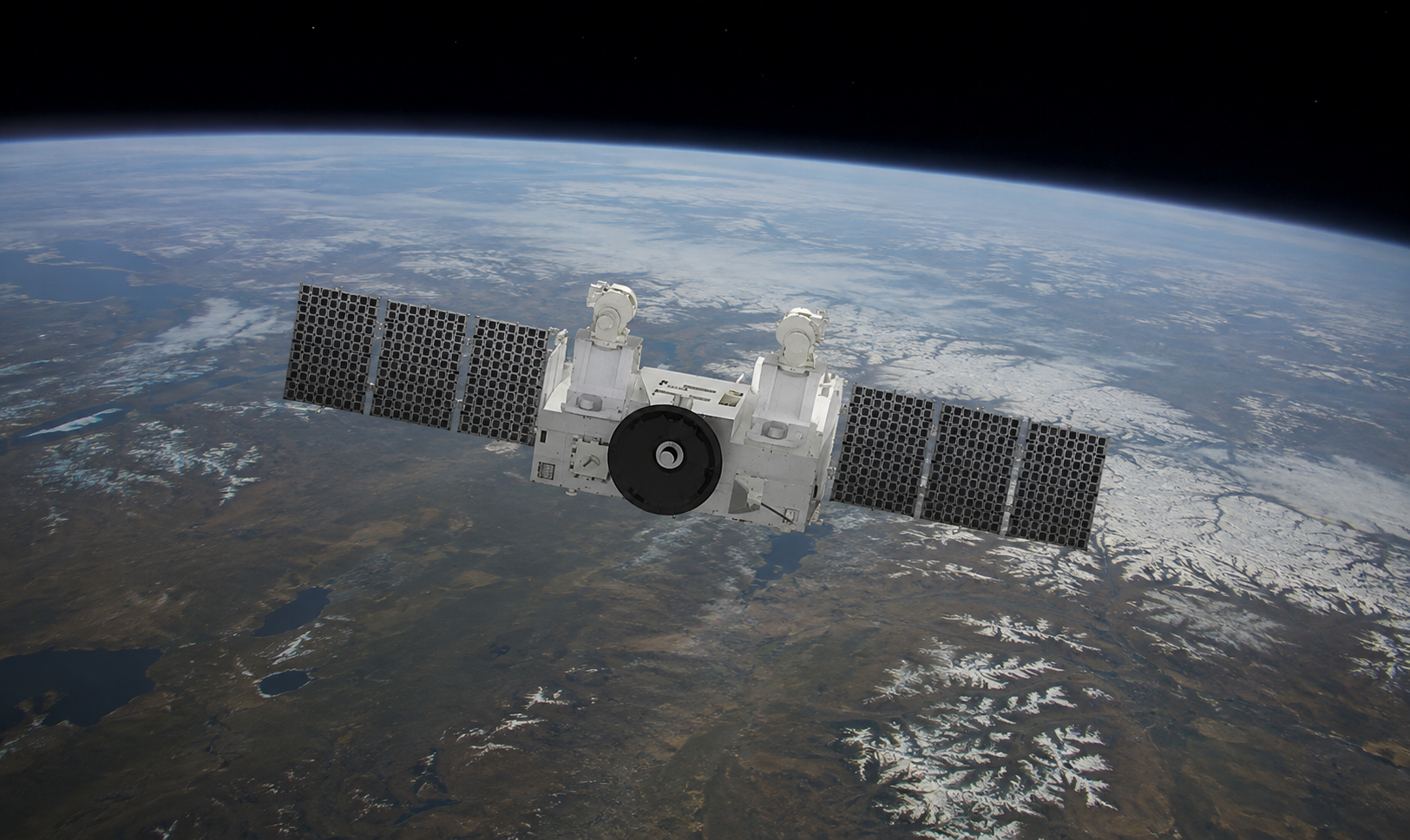
Image by AstroAnalytica
In July 2026, US Space Command published its Space Warfighting Environment 2040, anticipating proliferated satellite constellations capable of regenerating under attack, vulnerable terrestrial infrastructure, and architectures required to sustain military effects under persistent pressure. Meanwhile, the war with Iran has prompted commercial Earth observation providers to restrict access to satellite imagery across the Middle East. Then, in August 2026, Ukraine struck the Progress Rocket Space Centre in Samara, Russia, associated with Soyuz launch vehicles and the planned Rassvet low-Earth orbit satellite communications constellation.
Taken separately, these might appear to be technical episodes in the ongoing militarisation of space. Together, they point to a more consequential change in the character of space warfare. In the future, a space war may begin with an attempted knockout, but it will most likely become a prolonged contest over who can preserve, deny, and regenerate space-enabled services while the wider war continues on Earth.
This is not how space war has usually been imagined. For much of the past several decades, Western thinking has been preoccupied with a “space Pearl Harbor” scenario: a sudden attack against a small number of expensive military satellites that would render an opposing force blind, deaf, and dumb. This scenario reflects the architecture of the late Cold War with exquisite and difficult-to-replace satellites supporting forces built around speed, precision, and manoeuvre. An opening attack, therefore, promises consequences out of proportion to the number of satellites destroyed.
What is less often acknowledged is that the scenario also contains an assumption about war itself: that war will be comparatively short and that an early information advantage can be converted into decisive terrestrial results before the enemy recovers. The contemporary wars in Ukraine and the Middle East suggest otherwise. These conflicts are characterised by attrition, adaptation, and the severe constraint of manoeuvre across an increasingly transparent battlespace. Forces that concentrate or expose themselves are rapidly detected and lethally attacked, while neither side is easily able to turn technological advantage into a conclusive political result.
Proliferated low-Earth-orbit satellite constellations have contributed to this transparency, though they are not its only cause. Commercial satellite imagery, satellite communications, tactical drones, electronic intelligence, and AI-assisted data fusion now form an integrated sensor-effector system. Ukraine’s Delta network combines multiple sources into a near-real-time battlefield picture. Yet the result has often been dispersion, concealment, and a relentless struggle to find the enemy before being found in turn.
This, in turn, creates a paradox. The transparent battlefield makes the temporary denial of space services exceptionally valuable. Even a short interruption of communications, navigation, or surveillance might create the local and temporary conditions required for movement or attack. But proliferated satellite constellations make the comprehensive and permanent blinding of an adversary much more difficult. Space control will therefore be less a matter of achieving a stable condition of superiority than of creating recurring windows of advantage in particular places and times for particular purposes.
The object of attack is also changing. A constellation is a system comprising satellites, links, terminals, ground stations, software, factories, and launch sites. The service fails when a critical part of that chain fails. An adversary unable to destroy thousands of satellites may instead jam signals, corrupt data, compromise the network, or strike the industrial capacity required to replace losses.
Ukraine’s attack on the Progress rocket centre in Samara is significant in this regard. Proliferated satellite constellations in orbit can coexist with considerable concentration of supporting infrastructure on Earth: hundreds of satellites may depend upon a handful of launch sites and factories. The Samara strike belongs within the history of space warfare, even though no satellite was attacked; it targeted the machinery through which spacepower – the ability in peace, crisis, and war to exert prompt influence to, in, and from space - is generated.
The Iran war illustrates the same principle differently. The commercial Earth observation company Planet has delayed access to Middle East imagery because of concerns that it might be used against US and allied forces. Here, capability is constrained through contracts, customer access, and the timing of data releases rather than physical force – in effect, shutter control. Restricting one company cannot prevent an adversary from acquiring imagery elsewhere, but the episode shows that the wider contest concerns the use of information, not merely the survival of satellites.
Proliferated satellite constellations, while making architectures more resilient against selective attack, may encourage the development and use of weapons capable of much larger effects. If attacking satellites individually becomes futile, an adversary may turn to wide-area electronic warfare, simultaneous cyber compromise, debris-producing attacks, or even nuclear detonation in space.
The US intelligence community’s 2026 threat assessment states that Russia is developing a satellite intended to carry a nuclear anti-satellite weapon. Such a weapon would not discriminate between American, allied, adversary, or neutral spacecraft. As the 1962 Starfish Prime test demonstrated, a high-altitude explosion can create artificial radiation belts that persist for long periods of time after detonation. This would amount to environmental warfare against near-Earth space, potentially disabling replacement satellites as well as those already in orbit.
Such consequences may make nuclear use in space self-deterring, at least in the opening stages of war. The 2026 Global Counterspace Capabilities Report notes that, despite the continued development of counterspace capabilities by thirteen countries, only non-destructive forms are currently being used in active conflicts. But this should provide little comfort, as a state facing defeat in a prolonged conventional war may calculate risk differently from one contemplating the costs of aggression in peacetime. The more resilient proliferated constellations become against conventional attack, the greater the temptation may be to seek more indiscriminate means of disabling them.
All of this has profound implications for so-called strategic stability. As traditionally understood, strategic stability describes a condition in which neither side has an incentive to launch a nuclear first strike because each retains the ability to retaliate. Space systems featured in this calculation because they provided missile warning, supported arms-control verification, and provided nuclear command-and-control communications.
Yet strategic stability has never been an objective condition that can be engineered and safely maintained. It is a political judgement about which risks, vulnerabilities, and distributions of power are tolerable. What appears stable to a status quo power may resemble permanent subordination to a dissatisfied rival. Persistent surveillance may reassure one state while exposing another’s mobile nuclear forces. A satellite constellation described as defensive resilience by its owner may appear to an adversary as the targeting architecture for a disarming strike.
Technological change has repeatedly eroded the strategic settlements of previous eras. MIRVs, precision weapons, missile defence, cyber capabilities, and now artificial intelligence have each altered perceptions of vulnerability and advantage. Proliferated satellite systems continue this process. Even the supposedly stable nuclear bipolarity of the Cold War depended upon leaders, strategic cultures, political objectives, avoidance of misperceptions, and, more often than is comfortable to admit, good fortune.
The entanglement of nuclear, conventional, and commercial systems makes these judgements still more difficult. A satellite that is attacked because it supports conventional targeting might also contribute to missile warning. Communications disrupted to impede conventional forces may be connected, or believed to be connected, to nuclear command and control. After months of interference and unexplained failures, leaders may face each crisis with less reliable information and greater suspicion.
The greatest danger, therefore, may not be a deliberate attempt to disable nuclear command and control on the first day of a war. It may be the gradual erosion of confidence in warning and communications during a prolonged conflict until nuclear first use or pre-emption begins to appear rational and, as a consequence, tempting. Nor will more information necessarily solve this problem. The technologically complex choreography of modern warfare can create an illusion of omniscience while leaders remain dependent upon incomplete sensor feeds, uncertain attribution, algorithmic (and occasionally hallucinatory) assessments, and rapidly expiring opportunities for decisions. Information can increase even as political understanding declines.
A technologically minded observer might argue for still greater resilience: larger constellations, responsive launch, radiation-hardened satellites, diversified orbits, and terrestrial substitutes. These are sensible investments that can make a force harder to disable. But they cannot tell leaders what an opponent intends, whether restraint will be reciprocated, or when apparent prudence may invite aggression.
Arms-control agreements, norms against debris-producing attacks, crisis communications, and better attribution of space incidents may also reduce particular dangers, and they should be pursued where they are useful. But they will remain provisional instruments shaped by power and political circumstance, not the foundations of a permanently stable order. Stability – like love - is in the eye of the beholder, and agreements that reassure one side may constrain another or preserve an increasingly unacceptable status quo.
The paradox, then, is that the growing technological sophistication of space warfare will place greater demands upon the ancient art of statecraft. Political leaders will need to understand an adversary’s fears as well as its capabilities, signal resolve without eliminating room for restraint, preserve communications while conflict continues, and distinguish temporary operational advantage from strategically reckless escalation. No satellite architecture, algorithm, or arms-control formula can exercise prudence on behalf of statecraft.
The future space contest will therefore be prolonged, fluctuating, and specific to particular services and theatres. One side may retain communications while losing reconnaissance; another may preserve missile warning while suffering local navigation denial. Space superiority will not be a permanent condition that is achieved and then exploited, but an advantage that is repeatedly won, exploited, lost, and regenerated.
The future of space warfare may still begin with the knockout blow imagined by earlier planners. If contemporary conflicts are any guide, however, wars will be decided by endurance: the capacity to preserve services, mobilise industrial depth, operate through a damaged environment, and regenerate faster than the enemy can counter and suppress. This does not mean that a new formula for strategic stability must be found. Instability is not an aberration that strategy can eliminate; it is the condition that strategy and statecraft exist to manage. The more military power depends upon space, the less states can afford to mistake a technical system for a political order.