
(Credit: SpaceX)
When most initial public offerings occur, investors evaluate a familiar set of questions. How fast is revenue growing? Is the company profitable? Does management have a credible strategy? How large is the addressable market? SpaceX is different.
Its IPO is undoubtedly a financial event. It may also become one of the largest public offerings in history, raising approximately $75 billion at a valuation approaching $1.75 trillion. Yet to view the listing solely through a financial lens is to miss its broader significance. The SpaceX IPO should instead be understood as a geopolitical event.
The filing reveals a company that is working to sit at the intersection of commercial infrastructure, national security, communications, artificial intelligence, orbital logistics, and long-term ambitions for cislunar and interplanetary development. SpaceX is no longer simply competing in the aerospace sector. It is building infrastructure upon which governments, militaries, businesses, and societies may increasingly depend, and that dependency is the real story.
The twentieth century was shaped by control over energy infrastructure, maritime trade routes, and telecommunications networks. The twenty-first century may increasingly be shaped by control over orbital infrastructure. The SpaceX IPO provides perhaps the clearest indication yet that this transition is already underway.
The Core SpaceX Thesis
At its heart, the SpaceX investment thesis rests upon a deceptively simple proposition.
The company believes that access to space is becoming dramatically cheaper, more frequent, and more commercially valuable. If this assumption proves correct, then launch vehicles, satellite communications, orbital infrastructure, and eventually lunar and cislunar logistics could become foundational components of the global economy.
The filing reveals three interlocking growth engines.
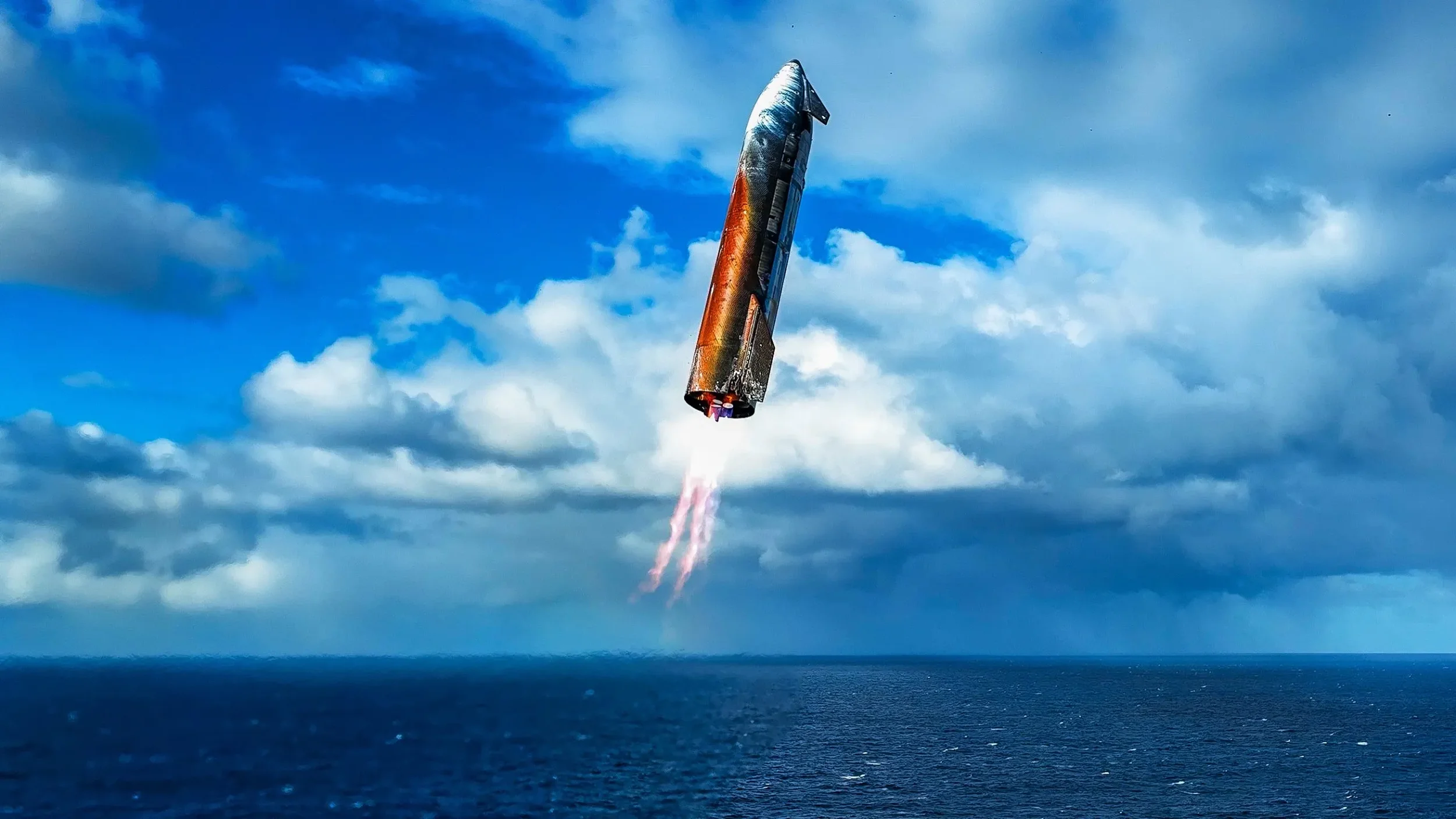
The first is launch. SpaceX has established a dominant position in orbital launch through Falcon 9 and Falcon Heavy, creating a launch cadence unmatched by any competitor anywhere in the world.
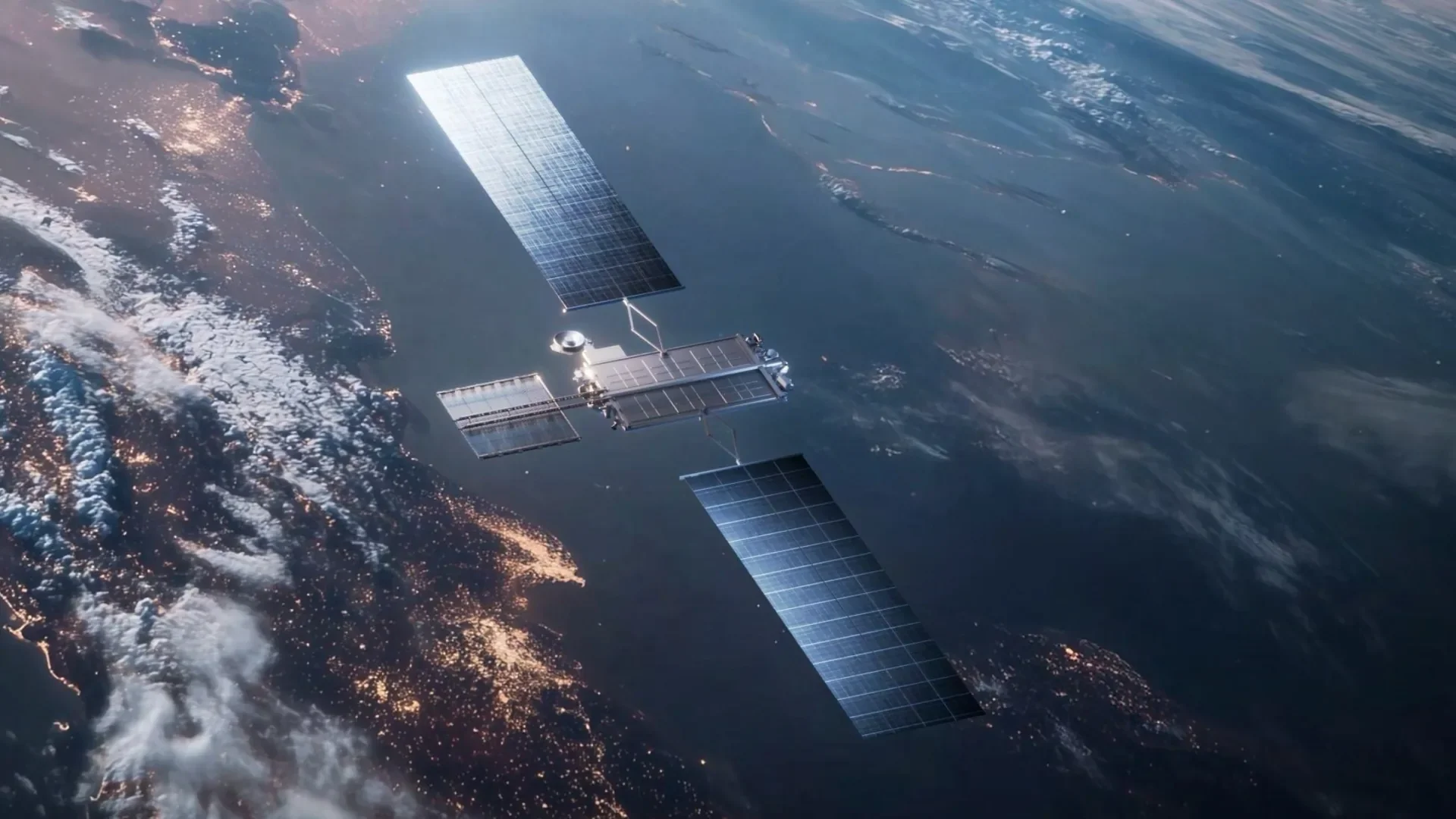
The second is connectivity. Starlink has evolved from an ambitious satellite broadband project into the company's principal revenue driver. The constellation has become one of the world's most important communications systems, serving consumers, governments, militaries, and commercial users across the globe.
The third is future infrastructure. The filing places enormous emphasis on opportunities related to artificial intelligence, orbital computing, space-based data infrastructure, and long-term expansion beyond Earth orbit. Much of the company's future valuation depends not on current profitability but on confidence that these future markets will emerge at scale.
This is why conventional valuation approaches struggle to capture the company's ambitions. Investors are not simply buying a launch company, they are buying exposure to a vision of future infrastructure.
The Governance Risk
The filing simultaneously reveals one of the most unusual governance structures in modern public markets.
Elon Musk retains approximately 85% voting control despite owning a substantially smaller economic stake. Governance provisions reportedly make removal of the chief executive extraordinarily difficult and preserve Musk's authority even after the company becomes public.
Supporters will argue that this structure protects long-term vision from short-term market pressure. They point to Musk's track record at Tesla and SpaceX and argue that transformational projects often require insulation from quarterly earnings expectations.
Critics will see something different.
They see “key-man” risk on an unprecedented scale. Strategic decisions, capital allocation, acquisitions, technological priorities, and long-term direction remain heavily dependent upon a single individual. The IPO therefore asks investors, governments, and commercial partners to place extraordinary confidence in Musk's judgement and continued effectiveness.
For policymakers and institutional investors, this creates an unusual challenge. SpaceX increasingly resembles critical infrastructure, yet its governance remains closer to a founder-controlled startup technology company than a traditional infrastructure provider.
The Elon Musk Risk
The governance issue leads directly to a broader question: how should observers think about Elon Musk himself?
Musk is simultaneously one of SpaceX's greatest strengths and one of its most significant risks.
His ability to attract talent, capital, political attention, and public enthusiasm has unquestionably contributed to the company's success. The extraordinary demand reported during the IPO process reflects not merely confidence in SpaceX, but confidence in Musk's ability to execute ambitious visions.
Yet this concentration of authority also creates vulnerability. Political controversies, regulatory disputes, legal challenges, succession questions, reputational crises, or simple strategic miscalculation could have outsized consequences. As SpaceX becomes increasingly integrated into critical communications, defence, and infrastructure systems, Musk himself becomes a geopolitical variable.
This is rare: very few infrastructure systems of comparable importance depend so heavily upon a single individual’s choices and health.
Why Non-US Governments Should Care
The most important geopolitical implication of the IPO is that SpaceX is becoming infrastructure.
Governments around the world use Starlink for connectivity, SpaceX launch services, and associated technologies. In many regions, there are few comparable alternatives. For U.S.-allied governments, this creates a difficult balancing act. SpaceX provides genuine capability advantages, but reliance upon any single foreign provider creates strategic exposure. The challenge, therefore, is not hostility from the United States or Musk himself; it is dependency.
Governments that depend heavily upon a foreign commercial infrastructure provider may eventually discover that commercial decisions have geopolitical consequences. Access, pricing, prioritisation, service continuity, regulatory compliance, and crisis response all become matters of national interest.
The lesson here is not to avoid SpaceX. The lesson is to understand the risks of concentration.
Military Implications
Modern militaries increasingly rely upon commercial space systems. The war in Ukraine demonstrates the operational importance of satellite communications, commercial satellite imagery, and rapidly deployable connectivity. Similar dynamics are likely to emerge in future conflicts.
For defence planners, the SpaceX IPO reinforces several realities. First, commercial systems are becoming integral components of military power. Second, commercial infrastructure creates new forms of dependency. And third, adversaries will increasingly target not only satellites but also terminals, gateways, software ecosystems, and other connective layers of infrastructure. The future of military spacepower may depend less upon ownership of satellites than upon control of the systems that connect them.
(Credit: SpaceX)
Implications for Institutional Investors
Institutional investors face a more complex proposition than the headline valuation suggests.
On one hand, SpaceX occupies an extraordinary position at the intersection of launch, telecommunications, AI infrastructure, and national security. On the other hand, the company remains heavily dependent upon future growth assumptions. Revenue growth has been impressive, yet losses remain substantial and future profitability depends upon markets that are still emerging. Still, SpaceX is now paid approximately $26 billion a year by Anthropic and Google for compute power supply provided by AIx, a subsidiary of SpaceX, perhaps constituting a strong signal that the company’s IPO thesis has firm foundations.
Investors are therefore making a judgement not merely about current performance, but about the future structure of the space economy itself.
Implications for Retail Investors
Retail investors face a different challenge. The IPO's unusually large retail allocation reflects an effort to broaden participation, yet enthusiasm can easily obscure risk. The combination of Musk's public profile, the company's technological achievements, and intense media attention creates conditions in which valuation discipline may become difficult. The central question for retail investors is not whether SpaceX is an impressive company, it is whether expectations have become so elevated that future performance must be exceptional merely to justify current valuations.
Implications for the United Kingdom
The SpaceX IPO is particularly significant for Britain because it exposes a growing gap between the UK's strategic ambitions in space and its ability to shape the infrastructure upon which future spacepower will depend.
Britain remains one of the world's leading space countries by influence, expertise, finance, and international connectivity. Yet it increasingly relies on foreign-owned launch systems, communications networks, and orbital infrastructure. Unlike the United States, China, and increasingly France, the UK lacks a clear pathway to infrastructure leadership.
The challenge for Britain is therefore not how to build a national SpaceX. It is how to remain strategically relevant in an orbital economy increasingly dominated by infrastructure platforms it does not control.
This may require a shift in thinking. Rather than competing directly in launch or megaconstellations, Britain should focus more on becoming indispensable in the governance, insurance, finance, intelligence, legal, and interoperability layers that connect the emerging orbital economy together.
The question facing British policymakers is not whether SpaceX becomes more powerful. It is whether the United Kingdom can identify and occupy the strategic chokepoints where influence can still be exercised despite lacking ownership of the underlying infrastructure.
Implications for the European Union
The implications for the European Union are, perhaps, the most profound. The SpaceX IPO exposes a fundamental tension at the heart of European space policy. Europe seeks strategic autonomy, yet remains deeply interconnected with American technology, capital, and security structures.
Some European policymakers will argue that the solution is a continental champion capable of competing directly with SpaceX. Others will favour regulation as a means of constraining American dominance. Neither approach fully addresses the underlying problem.
The real challenge is building a resilient European ecosystem capable of avoiding dangerous forms of dependency while remaining commercially competitive and strategically integrated with allies. That requires more than government funded launch vehicles or satellite constellations. It requires investment, procurement reform, regulatory coherence, capital formation, and a willingness to think about infrastructure as a geopolitical asset.
Geopolitics in Orbit
The SpaceX IPO is ultimately about far more than launch vehicles, satellites, or financial markets. It marks the emergence of a new category of geopolitical actor: the commercial infrastructure power.
For most of the Space Age, states built and controlled the critical systems that underpinned spacepower. Commercial firms supplied components, delivered services, and occasionally introduced innovation, but governments remained the primary architects of the space domain. That era is coming to an end.
The SpaceX filing reveals a future in which commercial actors increasingly own, operate, finance, and shape the space infrastructure upon which states, militaries, economies, and societies depend. Launch systems, communications networks, AI-enabled orbital infrastructure, logistics architectures, and soon cislunar transportation systems are now on a path to eventually converge into integrated ecosystems whose strategic significance will rival that of contemporary and historical maritime trade routes, energy networks, and digital infrastructure.
This development presents extraordinary opportunities. It may accelerate innovation, reduce the cost of access to space, expand global connectivity, and enable entirely new economic sectors. Yet it also introduces a profoundly new geopolitical reality.
The more successful SpaceX becomes, the less it resembles a conventional commercial enterprise and the more it resembles a global infrastructure utility upon which states, militaries, economies, and societies depend.
This raises a far more consequential question than policymakers, investors, and military planners have yet confronted:
What happens when a private company becomes part of the operating system of the international order?
Historically, the most consequential infrastructures, such as maritime routes, telecommunications networks, financial systems, and navigation services, were ultimately shaped, governed, or guaranteed by states. SpaceX suggests the emergence of a different model: a commercial actor providing capabilities so pervasive and strategically valuable that they begin to function as a de facto global public good.
Such a system offers immense benefits. It may also create new dependencies, new forms of leverage, and new geopolitical tensions as states seek to influence, regulate, compete with, or free themselves from infrastructure they neither own nor fully control.
For allies of the United States, this creates a dilemma of dependency. The capabilities provided by SpaceX are often too valuable to ignore, yet excessive reliance upon any single provider, no matter how friendly, creates strategic vulnerability. For competitors such as China, the IPO reinforces the urgency of constructing alternative infrastructure ecosystems capable of reducing exposure to American technological power.
For Europe, the filing exposes an uncomfortable reality. The challenge is not merely catching up with SpaceX technologically. It is determining whether Europe possesses the political will, institutional agility, and strategic coherence necessary to compete in the space domain in an era where infrastructure, rather than scientific prestige, has become the principal currency of spacepower.
For investors, the IPO is a wager not simply on a company, but on a particular vision of the future: one in which orbital infrastructure becomes as economically indispensable as terrestrial telecommunications, cloud computing, or global shipping.
The deeper implication, however, extends beyond any individual company.
The SpaceX IPO suggests that the next phase of geopolitical competition may not revolve exclusively around territory, resources, or even technology in the traditional sense. Instead, it may revolve around ownership, control, financing, regulation, security, and operational integration of the infrastructure systems upon which modern societies depend.
In that sense, the most important question raised by the SpaceX IPO is not whether SpaceX will succeed. It is whether the future balance of power will increasingly be determined by those who control the hidden infrastructure of the orbital economy.
If that is the case, then the IPO should not be viewed as the culmination of SpaceX's rise but as the opening act of a much larger geopolitical story, and the strategic actors who recognise that reality first will enjoy a decisive advantage over those who continue to think of space as merely another industrial sector.